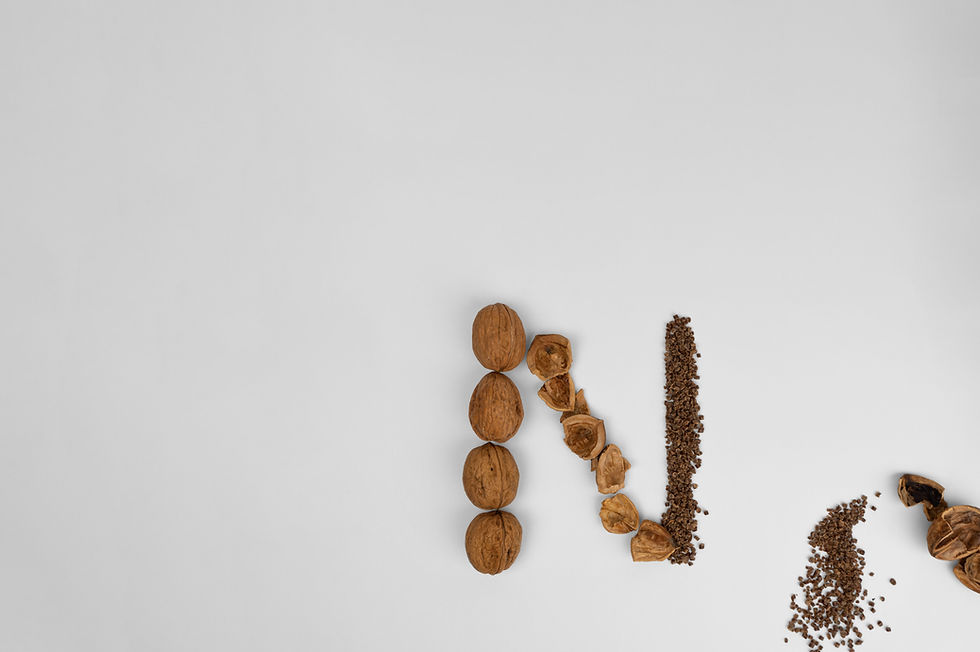
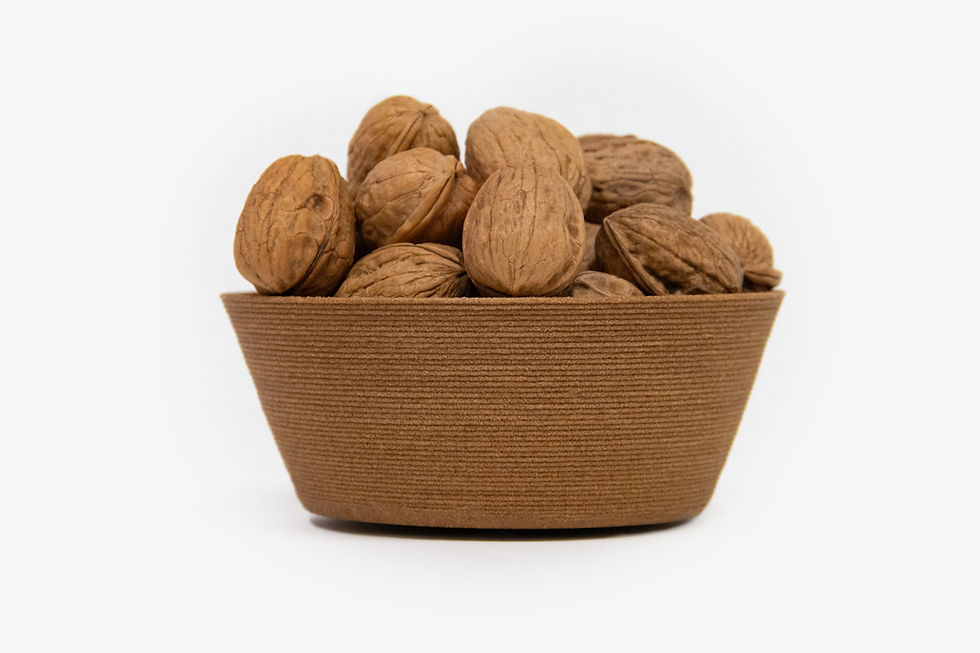
What do walnuts have to do with 3D printing?
When people think about the sustainability of 3D printing, they usually point to one thing - additive manufacturing, by its nature, only adds material where it's needed. So, unlike many traditional manufacturing methods, you don't need to remove large amounts of extra material in production, which can significantly reduce waste.
And while this is right, it's only a part of the story. The true nature and cleverness of it does not lie in technology alone; it comes from the combination of how we design, what we print with, and how those materials behave throughout their entire life cycle.
Better materials, not just better machines
Over the past decade, additive manufacturing has evolved far beyond plastic filament. Today, materials range from metals and ceramics to concrete, natural fibre composites, and bio-based polymers such as PLA and PHA.
For us, nuturally, biomaterials are where things get especially interesting. Using renewable resources can reduce reliance on virgin fossil materials and give new value to resources that might otherwise go unused. Many biomaterials are also designed with end-of-life in mind, introducing amazing benefits such as biodegradability and contributing to circular systems.
This is exactly where our walnut shells come in. By transforming an agricultural byproduct into a functional material for 3D printing, we give a second life to an overlooked resource while creating products with a distinctive natural aesthetic. We design for biodegradability, so the material can eventually return to nature without leaving persistent microplastics behind.

Designing with less
Materials, however, are only one piece of the puzzle. One of the biggest advantages of additive manufacturing is something people rarely see: geometry.
Because parts are built layer by layer, designers have much greater freedom to optimise their internal structure. Hollow sections, lattice support structures, and other lightweight geometries can often achieve the same performance while using significantly less material. In other words, smarter design can make the same product with fewer resources.
We've seen this repeatedly throughout our own product development. Small design adjustments can reduce material use, shorten print times, and improve overall performance, all without changing the purpose of the product itself.

We strongly believe that 3D printing should not be viewed and judged by one feature alone. It isn't just about reducing production waste. It isn't just about choosing renewable materials. And it isn't just about designing lighter products.
Real progress happens when many elements work together. New designs and geometries need quality materials to execute the vision, new materials need machines that can process them, new hardware then requires optimised software, and new business opportunities arise once all the puzzle pieces start fitting together. Material choice, product design, manufacturing process, and end-of-life each play a role in creating solutions that use resources more responsibly.
Because the future of additive manufacturing won't be defined by better machines alone. It will be shaped by better materials, smarter design, and choosing the right solution for the right purpose. 🌱